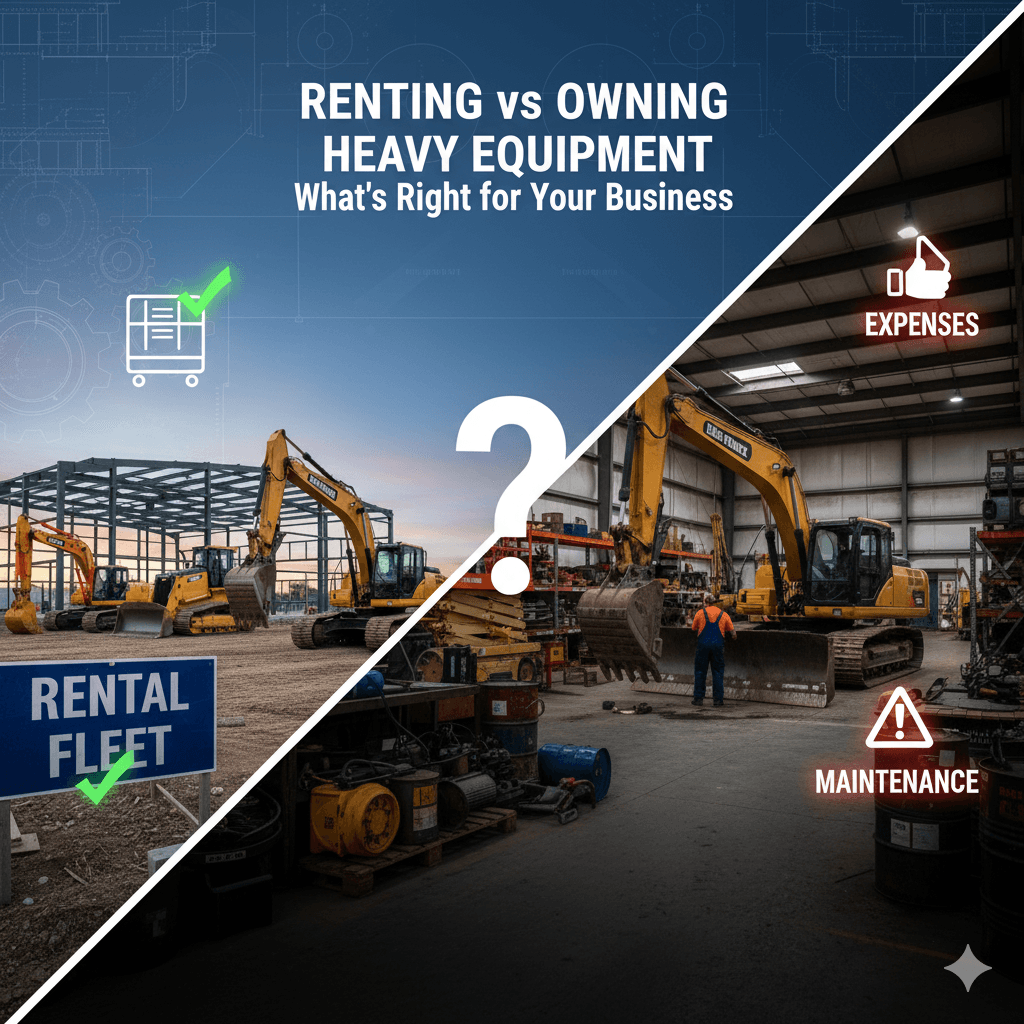
1. The True Cost of Ownership
Buying equipment can feel like a good investment, but ownership comes with hidden expenses. In addition to the purchase price, you need to consider maintenance, insurance, storage, transport, and depreciation. Machines also lose value over time, especially if they are underutilized or exposed to harsh environments.
Owning makes sense for contractors who use the same machines frequently throughout the year. If your excavator, loader, or dozer is on site nearly every week, the cost of ownership may be justified. However, idle machines still generate expenses even when they are not producing revenue.
2. The Flexibility of Renting
Renting provides the freedom to take on a variety of projects without committing long term capital. You can select the exact machine size and configuration for each job and scale your fleet up or down based on demand. This flexibility is ideal for small to mid sized contractors or seasonal operations.
Another major benefit is maintenance. Most rental vendors handle preventive service and provide replacement equipment in case of breakdowns, reducing downtime and administrative overhead. Rentals also eliminate storage costs when a project ends.
3. Financial and Tax Considerations
Equipment purchases tie up cash or credit lines that could be used elsewhere in your business. Rentals keep more capital free for payroll, fuel, or new bids. From a tax perspective, rental expenses are typically fully deductible as operating costs, while owned equipment must be depreciated over several years.
Speak with your accountant about how different financing or lease structures affect your balance sheet and cash flow. The right mix of owned and rented equipment can provide both stability and flexibility.
4. Utilization Rate as the Deciding Factor
A good rule of thumb is to measure utilization. If you expect to use a piece of equipment more than 65 to 70 percent of the time during the year, ownership might make financial sense. Below that threshold, renting usually delivers a lower total cost of ownership.
Accurate utilization tracking also helps vendors forecast demand and set competitive pricing. Platforms like Yardy allow vendors to monitor usage hours and generate utilization reports automatically.
5. Blended Strategies for Modern Fleets
Many successful businesses use a hybrid approach. They own core machines that are always required on site and rent specialized or high value equipment only when needed. This strategy ensures maximum productivity without locking up capital in low use assets.
Conclusion
There is no one size fits all answer to the rent versus own decision. The right balance depends on your project pipeline, financial position, and ability to manage maintenance. By analyzing total costs and utilization, you can choose the option that supports both profitability and growth.
Evaluate your next project today. Browse available rentals on yardy.us and see how flexible access to equipment can help your business stay efficient and competitive.