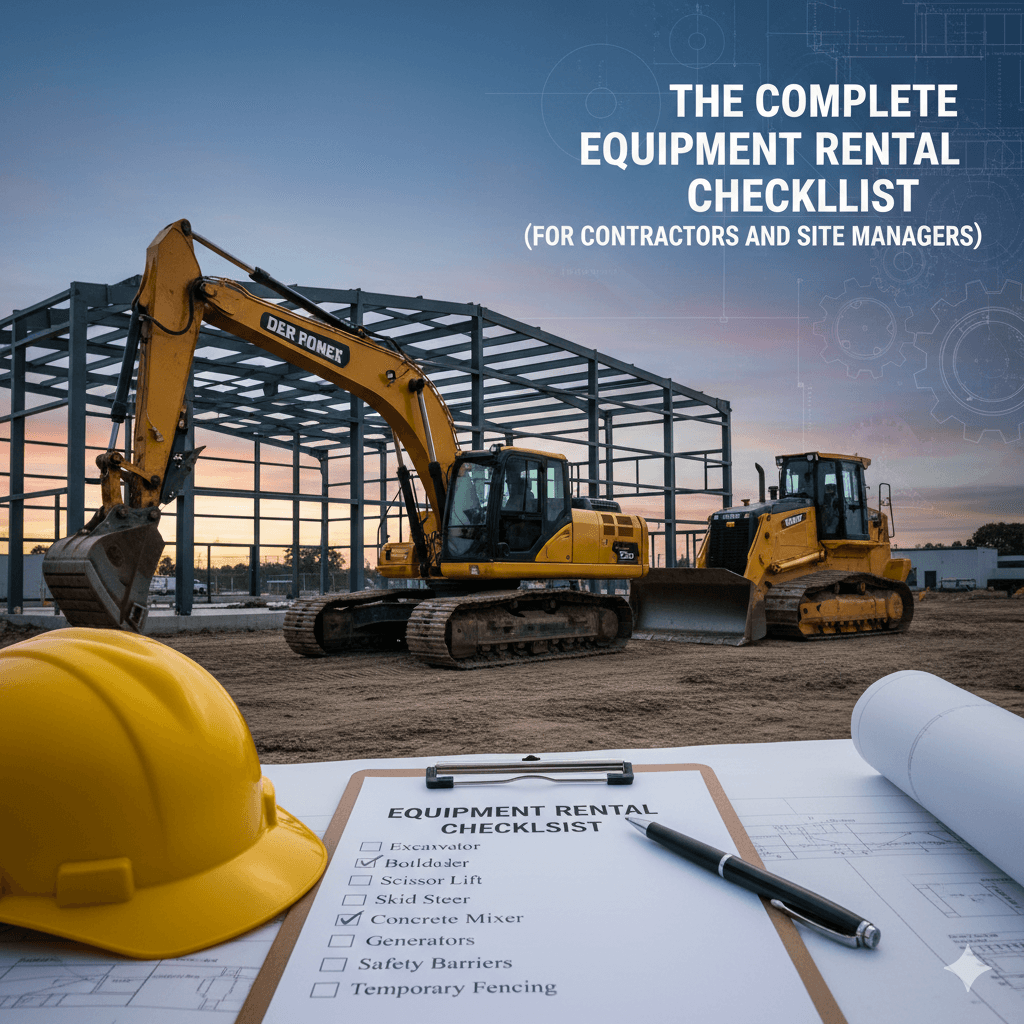
Renting heavy equipment can save time and capital, but it also comes with responsibilities. Following a consistent checklist before, during, and after every rental ensures that your project runs smoothly and that equipment is returned in good condition. Use this guide to build a repeatable rental process for your job sites
1. Before You Rent
Define the Job Requirements
Start by identifying exactly what you need the machine to do. Consider the type of material, site conditions, space limitations, and the required reach or lift height. Choosing the correct model size and attachment will prevent overpaying for capacity you do not need.
Set a Budget and Schedule
Estimate the number of days or weeks you will need the equipment. Compare vendor quotes and confirm delivery and pickup fees. Scheduling early ensures availability, especially during peak construction months.
Verify Vendor Credentials
Choose a trusted vendor with a reputation for reliable maintenance and on time delivery. Check customer reviews, insurance coverage, and service policies. On Yardy, all vendors are verified so you can book with confidence.
2. At Delivery and Handover
Inspect the Equipment
Walk around the machine with the delivery driver. Look for leaks, cracks, worn tracks, and missing safety decals. Check fluid levels and ensure the hour meter reading matches the rental contract.
Review Documentation
Collect copies of the operator manual, safety checklist, and emergency contact numbers. Confirm that attachments, keys, and any required accessories are included.
Record Condition and Photos
Take timestamped photos of the equipment from multiple angles. Yardy automatically stores these photos within the order record so both renter and vendor have proof of condition.
3. During the Rental
Operate Safely and Monitor Usage
Ensure only trained operators use the machine. Follow daily start up inspections and maintain proper logs of operating hours. Yardy automatically tracks utilization for accurate billing.
Perform Basic Maintenance
Check fluids, filters, and tire or track tension daily. Report any unusual noises or warning lights immediately to the vendor. Do not attempt complex repairs without authorization.
Keep the Site Organized
Store equipment on level ground, clear of debris and obstacles. Proper parking reduces the risk of damage and accidents.
4. Return and Closeout
Clean and Prepare the Equipment
Remove dirt, debris, and attachments before pickup. Vendors may charge cleaning fees for excessive buildup. A clean return also makes inspection faster.
Inspect Together with Vendor or Driver
Perform a final walk around and record photos. Note fuel levels and any wear or damage discovered. Address issues immediately to avoid later disputes.
Confirm Final Paperwork
Verify that the return report, hour meter reading, and any additional fees are accurate. Yardy simplifies this process by closing rentals digitally once both sides approve the checklist.
Conclusion
A clear rental checklist saves time, money, and stress for both contractors and vendors. By documenting every step and using digital tools to track condition, you can eliminate surprises and maintain long term relationships with trusted partners.
Start your next rental the right way. Log in to yardy.us to access verified vendors, digital inspection forms, and smart tracking that keep your projects running on schedule.